
Measurement accuracy in production processes plays a critical role in both maintaining quality standards and improving operational efficiency. This is particularly true in industries such as food, logistics, chemicals, packaging, and industrial manufacturing. industrial weighing solutions, forms the basis for achieving error-free results. Thanks to advancements in weighing technologies, businesses can optimize their production processes and significantly reduce their costs.
In this article, we discuss the advantages offered by industrial weighing solutions, the different weighing systems used and the strategic contributions they make to production processes.
Industrial weighing solutions are professional systems that enable precise weighing of products, raw materials, or semi-finished products on the production line. These solutions not only measure weight but also strengthen production accuracy, product standardization, and quality control processes.
These systems are used for the following purposes:
As a result, both accuracy and traceability in production processes are ensured.
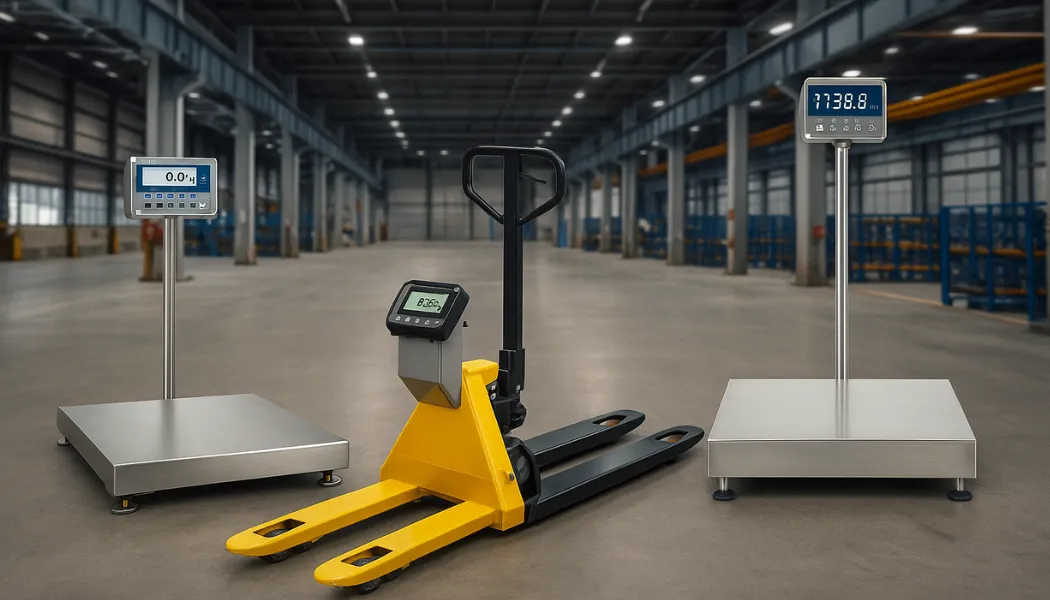
Platform scales are widely used for parcels, crates, packaged goods, or heavy loads. Their robust construction, wide weighing range, and high accuracy make them essential solutions for production facilities.
Dynamic weighing solutions weigh products while they are moving on the conveyor belt.
Advantages:
It plays a critical role especially in the food, pharmaceutical and packaging industries.
Parcel weighing labeling systems combine both weight measurement and labeling in a single process.
Benefits:
It is frequently preferred in warehouse and logistics operations.
Load cell-based weighing technologies are ideal for special applications requiring precise measurement.
Examples of usage areas:
These systems reduce formulation errors and increase process repeatability.
Modern weighing systems provide high accuracy from grams to tons, reducing the risk of manufacturing errors and ensuring a standard quality product.
Accurate weight control creates significant cost advantages, particularly in the food and chemical industries. Overfilling leads to product loss, while underfilling leads to customer complaints and returns. The accuracy provided by weighing systems eliminates these problems.
Industrial weighing solutions are at the heart of quality control processes, providing critical data for food safety and compliance with production standards.
Automatic weighing and sorting systems save time by reducing operator intervention and enable uninterrupted operation in the production flow.
Digital weighing systems can record and analyze production data, allowing businesses to:
This feature is a great advantage especially for high-capacity production facilities.
Industrial weighing solutions have become much more advanced with digitalization. New-generation systems:
These integrations provide full traceability and control in production. Thanks to sensor technologies, camera-supported analysis systems, and AI-based weighing algorithms, the margin of error in production errors is reduced to almost zero.
The fact that they are used in various sectors makes weighing systems a common requirement of the industry.
Next-generation weighing solutions are becoming faster, more reliable, and more user-friendly with automation, image processing, artificial intelligence, and robotic applications. In the future, weighing systems will:
These developments will continue to play a key role in the transformation of the manufacturing sector.